
As it turns out, the "America First" slogan didn't mean PresidentDonald Trumpwould stop the United States from intervening around the world.
More:President Trump's stunning start: Reshape the government, remake the world
The capture of Venezuelan President Nicolás Maduro in Caracas on Jan. 3 and his pending arraignment in New York on charges of narco-terrorism are more evidence that this commander-in-chief is willing to assert U.S. economic, energy and security interests across the globe not only with forceful rhetoric but also with force itself.
"This was a very important symbol," Trump said in an interview on Fox News. "It said this thing, that we're not going to be pushed around by these countries." With elite military teams and cutting-edge equipment, he boasted, "Nobody can stop us."
Since his inauguration a year ago, a new Trump Doctrine has emerged.
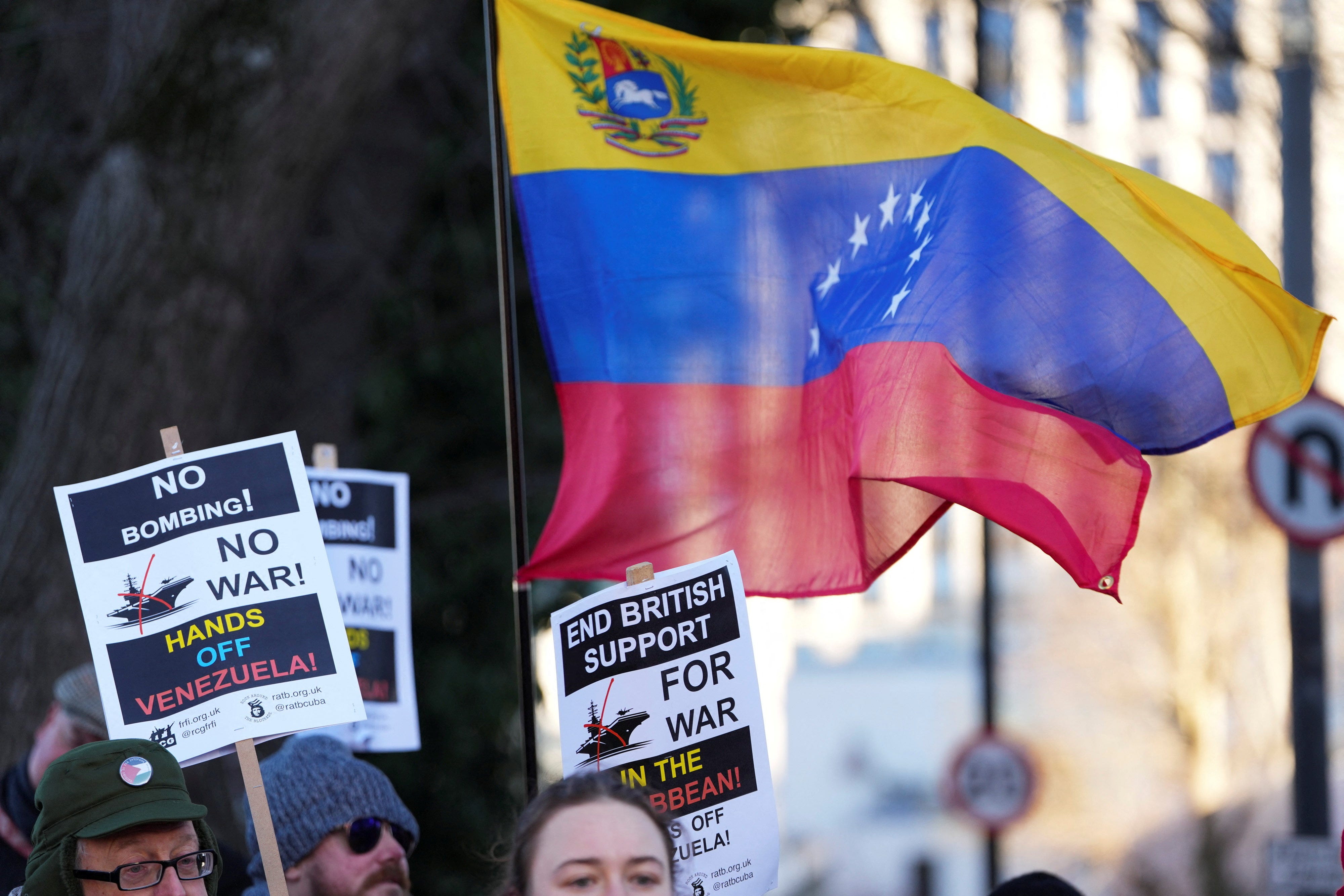
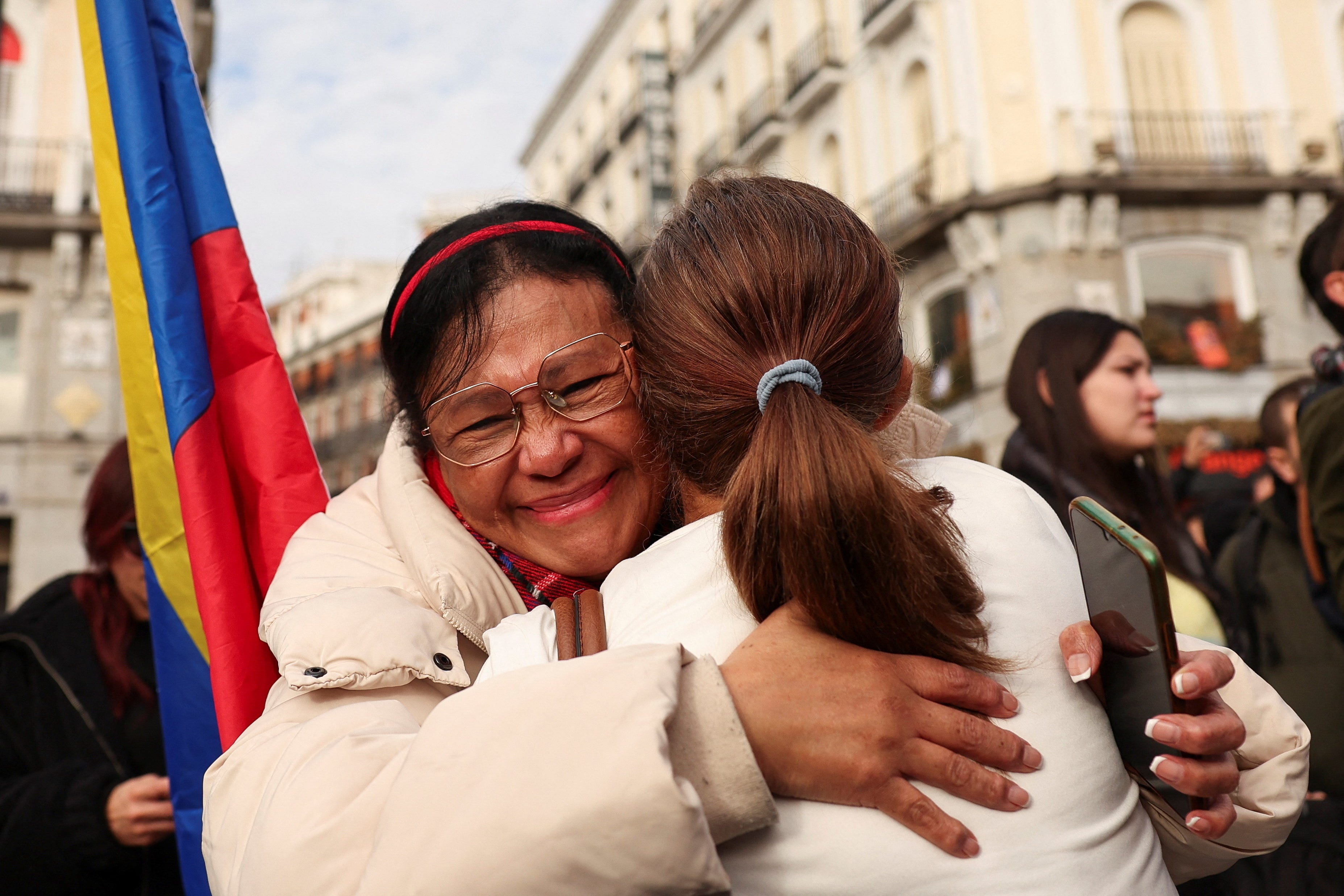
 Reactions to the United States' bombing of Venezuela and capture of the country's president Nicolás Maduro ranged across the world. Some celebrated the operation while others rebuked Trump's intervention in the South American country. See the reactions in photos, beginning here with Venezuelans living in Chile celebrating in Santiago on January 3, 2026." style="max-width:100%; height:auto; border-radius:6px; margin:10px 0;" loading="lazy" />


See reactions after US explosions in Venezuela, Maduro capture
Reactions to theUnited States' bombing of Venezuela and capture of the country's president Nicolás Maduroranged across the world. Some celebrated the operation while others rebuked Trump's intervention in the South American country. See the reactions in photos, beginning here with Venezuelans living in Chile celebrating in Santiago on January 3, 2026.
On his watch, the United States has cited a variety of reasons for bombing a half-dozen countries, including a Christmas Day strike in Nigeria in response to what he described as attacks on Christians.
He has hit Iran's nuclear sites with bunker-busting bombs, a step that previous presidents had refused to take despite Israeli entreaties. The day before the Venezuelan operation that captured Maduro, Trump warned Iran that if peaceful protesters on its streets were killed, the U.S. was "locked and loaded and ready to go" to rescue them.
That threat "is everything we voted against in '24," said former MAGA loyalist Marjorie Taylor Greene, now a Trump critic.
She was referring to "America First," a slogan Trump used in all three of his presidential campaigns. Greene and other core supporters interpreted that as a pledge to avoid foreign entanglements, especially those that could risk "endless wars" like those in Iraq and Afghanistan.
Instead, as president, he was promising to focus on problems within U.S. borders.
From Gaza to Caracas, shaping new governments
But during his second term, Trump's approach to the world has stood in clear contrast to that. He has been willing not only to deploy force abroad but also to commit the United States to shaping the foreign regimes that follow.
After pushing for a ceasefire between Israel and Hamas, he appointed himself chairman of the "Board of Peace" tasked with establishing security and encouraging economic development in Gaza.
In Venezuela, he said Washington wouldn't leave until a new and friendly government was installed.
"We're going to run the country until such time we can do a safe, proper and judicious transition," he said, though he didn't detail precisely what that would entail. He warned would-be leaders of Venezuela who might want to defy the United States: "What happened to Maduro could happen to them."
"Where will this go next?" protestedVirginia Sen. Tim Kaine, a Democrat. "Will the President deploy our troops to protect Iranian protesters? To enforce the fragile ceasefire in Gaza? To battle terrorists in Nigeria? To seize Greenland or the Panama Canal?"

That said, the Trump Doctrine also has boundaries.
For one, he has generally avoided deploying ground troops, which is typically a more dangerous duty than bombing strikes by planes or drones.
"We're not afraid of boots on the ground if we have to have them," he said at an hour-long news conference at his Mar-a-Lago retreat. But he later demurred that the only U.S. forces he foresaw in Venezuela would be protecting oil fields.
For another, he has cited as motivation for acting not what he sees as a gauzy pursuit of democracy and human rights but rather the hard-headed calculation of national interests, especially financial ones and especially involving energy.
He brushed off criticism that the administration hadn't notified Congress before assault launching Operation Absolute Resolve in Venezuela.
Democrats were "weak, stupid people," he said on Fox. "They should say 'great job.' They shouldn't say, 'Oh, gee, maybe it's not constitutional.'"
Echoes of Noriega arrest – and President Monroe's doctrine
Much of what Trump has done in the White House has been unprecedented.
Not this time.
In December 1989, President George H.W. Bush ordered an invasion of Panama and the capture of Panamanian President Manuel Noriega on charges of drug trafficking and racketeering. (As it happened, Noriega was taken into custody in 1990 on Jan. 3, precisely 36 years prior to Maduro.) Noriega would be tried in Miami and convicted, serving 17 years in a U.S. prison.
More:What a century of US interventions in Latin America say about Trump's Venezuela gambit
In an address to the nation at the time, Bush said the invasion was justified because Panama had declared a state of war with the United States, and because it was needed to protect American citizens living in Panama and to defend democracy and human rights.
He didn't seek congressional authorization, either. The operation also sparked international outrage.

Trump's assertion of U.S. dominance of the Western hemisphere has a much longer history. The Monroe Doctrine, articulated by President James Monroe in 1823, held that any intervention by a foreign power in the Americas would be viewed as a hostile act. Since then, it was often cited to justify U.S. intervention in Latin America.
More:Will Venezuela buckle under Trump? Maduro wouldn't be the first to fall
Trump mentioned it, too, as he took a victory lap at his news conference.
A "spectacular assault" had brought an "outlaw dictator" to justice, he said. When a reporter asked how running a South American country was "America First," he replied mildly that the United States needed "good neighbors," regional stability and access to oil.
Under Maduro, Venezuela had violated "core principles of American foreign policy, dating back more than two centuries ... all the way back to the Monroe doctrines," Trump said, warming to the topic. "The Monroe Doctrine is a big deal, but we have superseded it by a lot, by a real lot. They now call it the 'Don-Roe' Doctrine."
He dismissed out of hand the reality that U.S. intervention in Latin America has had decidedly mixed results. "Not with me," he said. "We have a perfect record of winning."
Next question?
This article originally appeared on USA TODAY:What Maduro's startling arrest tells us about Trump's foreign policy
