NEO NEWS

ShowBiz & Sports Celebrities Lifestyle

Hot

Wednesday, February 4, 2026

Body found on Cyprus beach identified as missing Russian businessman once detained in Belarus

February 04, 2026
Body found on Cyprus beach identified as missing Russian businessman once detained in Belarus

NICOSIA, Cyprus (AP) — Authorities in Cyprus said Wednesday a body discovered last month on a beach along the country's southern coastline has been identified as the former chief executive of Russia's largest potash company who had been detained in Belarus in 2013 on charges of harming the Belarusian economy.

Police on a British military base in Cyprus said DNA analysis confirm the body is that of Vladislav Baumgertner, 53, who went missing from his home in the coastal city of Limassol on Jan. 7. Baumgertner's body was found a week later on Avdimou beach.

An investigation into the circumstances as well as the cause of Baumgertner's death is ongoing, according to the British Sovereign Base Areas police. Baumgertner's relatives have been notified. Avdimou lies inside one of two military bases on Cyprus that the U.K. retained after the island gained independence from British colonial rule in 1960. The bases have their own police force and courts.

Baumgertner was the CEO ofUralkali when Belarusian authoritiesplaced him under house arrest in September 2013 after a dispute between his company and its Belarusian trading partner escalated.

He was released two months later and extradited to Russia where prosecutors launched a criminal probe against him on abuse of office charges.

At the time, analysts had attributed Baumgertner's arrest to retaliation for Uralkali's decision to pull out of a joint venture.

Uralkali and state-owned Belarusian Potash Co. had been exporting the commodity — a key ingredient in fertilizer — through a joint venture that at the time accounted for about a quarter of the world's potash.

Uralkali pulled out of the trading venture after accusing the government in Minsk of allowing the state-owned company to export potash independently.

Uralkali's withdrawal left Belarusian Potash Co. with virtually no qualified staff and raised fears of a price war. Belarusian President Alexander Lukashenko claimed that Uralkali and Baumgertner's actions harmed his country's economy.

Baumgartner had been living in Cyprus for several years. He had reportedly been staying in an apartment above his place of business in Limassol that thousands of Russian expatriates have made their home.

Read More

A key nuclear weapons treaty is ending. It’s a blow to Russia’s ‘superpower’ myth

February 04, 2026
A key nuclear weapons treaty is ending. It's a blow to Russia's 'superpower' myth

Since the collapse of the old Soviet Union, Russia has cut a substantially diminished figure on the international stage.

CNN A Russian Yars intercontinental ballistic missile launcher rolls on Red Square during the Victory Day military parade in central Moscow on May 9, 2024. - Alexander Nemenov/AFP/Getty Images

The breakup, back in 1991, of what US President Ronald Reagan once dubbed an "evil empire" left the Kremlin with less territory, less financial muscle and less influence around the globe.

But Russia retained its clout in one crucial area.

Its continued status as a nuclear superpower, on a roughly equal footing with the United States, guaranteed even a weakened Moscow a place at the top table of international diplomacy.

At nuclear summits, the Kremlin's leader could grandly sit across from the incumbent in the White House – just like in the glory days of the Cold War – to decide on matters of international security.

In 2010, then-US President Barack Obama and his briefly empowered Russian counterpart, Dmitry Medvedev, did just that, agreeing the New START (Strategic Arms Reduction Treaty), which was hailed at the time by the White House as "historic." The New START treaty limits both countries to a maximum of 1,550 deployed long-range nuclear warheads on delivery systems, including intercontinental ballistic missiles, submarine-launched ballistic missiles and bombers.

But those days, like the New START treaty itself that expires on Thursday, now appear to be over.

US President Barack Obama, left, and Russian President Dmitry Medvedev sign a treaty cutting their nations' nuclear arsenals in Prague, Czech Republic, on April 8, 2010. - Jewel Samad/AFP/Getty Images

The demise of the last arms control deal between the US and Russia – which Washington repeatedly accused Moscow of violating by denying inspections of Russian nuclear facilities – has been brushed off by the Trump administration, with the US president himself shrugging off the terrifying prospect of a world without nuclear limits.

"If it expires, it expires,"Trump quipped in January, while suggesting a "better" deal may eventually be done.

That distinct lack of urgency from Washington stands in stark contrast to the anxiety in Moscow, where there has been much wailing and gnashing of teeth over the arms reduction issue.

Speaking to journalists in Moscow as the expiry of the New START treaty loomed, Medvedev – no longer president but an outspoken security official on the margins of power – warned of the danger of allowing the deal to lapse. He suggested it would speed up the "Doomsday Clock," the symbolic representation of how close humanity is to destroying the world.

Advertisement

"I don't want to say that this immediately means a catastrophe and a nuclear war will begin, but it should still alarm everyone," Medvedev added.

The Kremlin certainly seems alarmed.

It's proposal to extend the terms of New START has, according to the Kremlin spokesman, Dmitry Peskov, so far been met with silence from the US side, threatening to unleash a new era of insecurity.

"For the first time, the United States and Russia, the two countries that possess the world's largest nuclear arsenals, will be left without a fundamental document that would limit and establish controls over these arsenals," Peskov told journalists on a recent conference call focused on the nuclear issue.

"We believe this is very bad for global and strategic security," he added, pressing on fears likely to be shared around much of the world.

US President Donald Trump, joined by Secretary of State Marco Rubio, left, Secretary of War Pete Hegseth, center right, and Secretary of the Navy John Phelan, announced the creation of the “Trump-class” battleship at Trump’s Mar-a-Lago estate, Florida, on December 22. - Tasos Katopodis/Getty Images

But the Kremlin's expressions of concern may be more self-interested and strategic than they are prepared to admit.

Apart from being deprived of an arms-reduction platform that grandstands one of their last remaining vestiges of Soviet-era power, Moscow is now facing a future of potentially unconstrained US nuclear expansion.

The Trump administration has, for example, already re-floated the idea of nuclear-armed "Trump-class" battleships, a Cold War era policy that was abandoned decades ago.

The old Soviet Union could have matched it. But with an economy and a defense budget that are a fraction of Washington's, Moscow has virtually no hope of keeping up – exacerbating the already vast gap in power and leverage between the old rivals.

Of course, the US has its own reasons for allowing nuclear arms control with Russia to lapse, not least its desire to include China, an emerging nuclear power, in future agreements.

But the expiry of New START marks the end of an era, not just of "superpower" arms control treaties that focused exclusively on Moscow and Washington, but also of one in which the US was willing to accept nuclear limits.

For more CNN news and newsletters create an account atCNN.com

Read More

Trump's border czar pulling 700 immigration officers out of Minnesota immediately

February 04, 2026
Trump's border czar pulling 700 immigration officers out of Minnesota immediately

MINNEAPOLIS (AP) — The Trump administration is reducing the number of immigration officers in Minnesota but will continue itsenforcement operationthat has sparked weeks of tensions and deadly confrontations, border czar Tom Homan said Wednesday.

Associated Press

About 700 federal officers — roughly a quarter of the total deployed to Minnesota — will be withdrawn immediately after state and local officials agreed over the past week to cooperate by turning over arrested immigrants, Homan said.

But he did not provide a timeline for when the administration might endthe operationthat hasbecome a flashpointin the debate over President Donald Trump'smass deportation effortssince the fatal shootings of U.S. citizensRenee GoodandAlex Prettiin Minneapolis.

About 2,000 officers will remain in the state after this week's drawdown, Homan said. That's roughly the same number sent to Minnesota in early January when the surge ramped up, kicking off what the Department of Homeland Security called its "largest immigration enforcement operationever."

Since then, masked, heavily armed officers have been met byresistance from residentswho are upset with their aggressive tactics.

A widespread pullout, Homan said, will occur only after protesters stop interfering with federal agents carrying out arrests and setting up roadblocks to impede the operations.

Gov. Tim Walz and Minneapolis Mayor Jacob Frey, both Democrats who have heavily criticized the surge, said pulling back 700 officers was a good first step but that the entire operation should end quickly.

"We need a faster and larger drawdown of forces,state-led investigationsinto the killings of Alex Pretti and Renee Good, and an end to this campaign of retribution," Walz posted on social media.

Vice President JD Vance said the officers being sent home were mainly in Minneapolis to protect those carrying out arrests. "We're not drawing down the immigration enforcement," Vance said in an interview on "The Megyn Kelly Show."

Trump administration has pushed for cooperation in Minnesota

Trump's border czartook over the Minnesota operation in late January after thesecond fatal shootingby federal officers and amidgrowing political backlashand questions about how the operation was being run.

Homan said right away that federal officials could reduce the number of agents in Minnesota, but only with the cooperation of state and local officials. He pushed for jails to alert Immigration and Customs Enforcement about inmates who could be deported, saying transferring those inmates to ICE is safer because it means fewer officers have to be out looking for people in the country illegally.

Homan said during a news conference Wednesday that there has been an "increase in unprecedented collaboration" resulting in the need for fewer public safety officers in Minnesota and a safer environment, allowing for the withdrawal of the 700 officers.

He didn't say which jurisdictions have been cooperating with DHS

The Trump administration has long complained that places known as sanctuary jurisdictions — a term applied to local governments that limit law enforcement cooperation with the department — hinder the arrest of criminal immigrants.

Advertisement

Minnesota officials say its state prisons and nearly all of the county sheriffs already cooperate with immigration authorities.

But the two county jails that serve Minneapolis and St. Paul and take in the most inmates had not previously met ICE's standard of full cooperation, although they both hand over inmates to federal authorities if an arrest warrant has been signed by a judge.

The Hennepin County Sheriff's Office, which serves Minneapolis and several suburbs, said its policies have not changed. The Ramsey County Sheriff's Office in neighboring St. Paul did not immediately respond to a request for comment.

Border czar calls Minnesota operation a success

Homan said he thinks the ICE operation in Minnesota has been a success, checking off a list of people wanted for violent crimes who were taken off the streets.

"I think it's very effective as far as public safety goes," he said Wednesday. "Was it a perfect operation? No."

He also made clear that pulling a chunk of federal officers out of Minnesota isn't a sign that the administration is backing down. "We are not surrendering the president's mission on a mass deportation operation," Homan said.

"You're not going to stop ICE. You're not going to stop Border Patrol," Homan said of the ongoing protests. "The only thing you're doing is irritating your community"

Schools ask court to block immigration operations

Two Minnesota school districts and a teachers union filed a lawsuit Wednesday to block federal authorities from conducting immigration enforcement at or around schools.

The lawsuit says actions by DHS and its ICE officers have disrupted classes, endangered students and driven families away from schools.

It also argues that Operation Metro Surge has marked a shift in policy that removed long-standing limits on enforcement activity in "sensitive locations," including schools.

Homeland Security officials have not responded to a request for comment.

Associated Press reporters Corey Williams in Detroit; John Seewer in Toledo, Ohio; and Moriah Balingit in Washington contributed.

Read More

Why a 2026 World Cup boycott is unlikely to be successful

February 04, 2026
FIFA President Gianni Infantino gives President Donald Trump the FIFA Peace Prize at the Kennedy Center on Dec. 5.

Calls for a European-led World Cup boycott have grown louder and louder in recent weeks. Yet the possibility one could happen is "slim to none," said Alan Rothenberg, a man who knows a little bit about both World Cups and boycotts.

Rothenberg organized the soccer tournament at the 1984 L.A. Games, which was boycotted by 19 countries. Ten years later, he led the organization that put on the 1994 World Cup, the first held in the U.S. and still the best-attended in history.

So while politicians and soccer officials in several key European countries — Germany, France, Denmark and the United Kingdom, among others — haveraised the idea of skipping this summer's World Cup, largely in response to President Trump's demands that Denmark hand over Greenland, Rothenberg knows that talk is all bluster.

A boycott is not likely to happen for a number of reasons.

Read more:German soccer leader adds to calls for boycott of World Cup matches in United States

For starters the World Cup is run by the same organization, FIFA, which sanctions virtually every level of soccer globally, from the men's and women's World Cups, to confederation competitions including the UEFA Championships and the Copa América, to most major age-group tournaments. And since it both writes and enforces its own laws, it can ban a federation — and, by extension, its national teams — from any and all competitions.

So imagine the price a single country, say Spain, would pay for refusing to play World Cup games in the U.S. FIFA could ban its national team from the Euros and its women's team from next summer's World Cup, costing the federation millions of dollars in revenue. It could also prohibit Spanish youth teams from participating in age-group competitions and cut Spain off from any FIFA funding.

Consider the case of Russia. After that country invaded neighboring Ukraine in the winter of 2022, FIFA — under enormous international pressure — banned Russia from international soccer completely, barring it from competing in qualifying for the 2022 and 2026 World Cups and keeping it out of the 2024 Euros.

As a result, Russia has not played in a competitive match since November 2021.

Donald Trump, Claudia Sheinbaum and Mark Carney stand on stage with IOC President Gianni Infantino.

(FIFA's penalties can be arbitrary and maddeningly inconsistent, however. In 2014, four days after the Winter Games in Sochi, Russia invaded Ukraine the first time, annexing Crimea. Yet less than four months later Russia played in the World Cup and four years later it hosted the tournament, with FIFA president Gianni Infantino sitting beside Vladimir Putin, who ordered both the 2014 and 2022 invasions. Now Infantino is pushing to lift the sanctions on Russia completely despite the fact Putin has stepped up the war, bombing civilians and resisting calls for peace.)

No country has boycotted a World Cup since World War II, though Olympic boycotts have been more frequent with coalitions of as many as five dozen countries refusing to take part in the Summer Games four times between 1956 and 1984.

Those protests were largely coordinated by politicians, not athletes or their federations. President Carter led the largest boycott, rallying more than 60 nations to skip the 1980 Moscow Olympics following the Soviet invasion of Afghanistan. Four years later, a group of mostly Soviet Bloc countries stayed home from the L.A. Olympics in response.

No World Cup boycott could hope to succeed without a similar coalition and that's unlikely to happen. But that hasn't stopped people from talking about one just the same.

Read more:California lawmakers flag concerns about World Cup visas, ban threats and ticket prices

In Germany, Oke Gottlich, one of the German soccer federation's 11 vice presidents, said last month that it's time to "seriously consider a boycott." Bernd Neuendorf, the federation president, said the idea was not "a major debate at all," calling it "completely misguided."

Last Saturday, Germany officially ruled out a boycott.

In France, where politicians have discussed a boycott, sports minister Marina Ferrari and Philippe Diallo, president of the country's soccer federation, both dismissed such talk out of hand.

Still, the idea isn't completely dead. Mogens Jensen, who serves in the Danish parliament, said a World Cup boycott was "one of the last tools in the toolbox" and said if the U.S. were to instigate a real conflict, then a "boycott discussion in very, very relevant."

Still, as improbable as a boycott may be, keeping alive the possibility may be just as effective as actually following through with it. Talk of some sort of World Cup protest, for example, may have played a part in Trump's decision to back off his threats of invading Greenland, the issue that has most angered Europeans.

But that's not the only issue. Coverage of immigration raids in Minnesota and threats by Trump — the host of the U.S. portion of the World Cup — to bomb Iran (a World Cup qualifier) after using the military to extract the president of Venezuela have created a vision of violence and chaos in the U.S. that has frightened and appalled many in Europe.

"I don't know what things are going to look like in June," said Andrew Bertoli, an assistant professor at IE University in Segovia, Spain, and an expert on the social and political effects of sports. "But the perceptions right now are the United States is in a very volatile political situation and it's very unusual."

If national soccer federations feel trapped between a rock and the World Cup, however, there's nothing to keep fans from voting with their wallets and electing to stay home.

Others have opted to attend matches only in Mexico or Canada, which are sharing hosting duties with the U.S., while some have changed their mind about coming to the tournament at all and have reportedly begun reselling their tickets. FIFA will benefit from the change in plans, gaining a 15% fee from the seller and a 15% fee from the buyer of resold tickets.

"I absolutely think that could prevent tourists from going to the United States," said Bertoli, the Segovia professor.

Get the best, most interesting and strangest stories of the day from the L.A. sports scene and beyond from our newsletter The Sports Report.

This story originally appeared inLos Angeles Times.

Read More

Patrick Mahomes' Dad Jailed After Alleged Probation Violation: Reports

February 04, 2026
Patrick Mahomes' Dad Jailed After Alleged Probation Violation: Reports

Perry Knotts/Getty; David Eulitt/Getty

People Patrick Mahomes; Patrick Mahomes Sr. Perry Knotts/Getty; David Eulitt/Getty

NEED TO KNOW

  • Patrick Mahomes Sr., the father of NFL star Patrick Mahomes, had reportedly been arrested after he allegedly violated his probation

  • The former MLB star pleaded guilty to his third DWI in 2024 and was allegedly caught consuming alcohol, multiple outlets reported Tuesday, Feb. 3

  • If found guilty, he could face up to 10 years in prison

Patrick Mahomes Sr.has been arrested after an alleged probation violation, according to multiple reports.

On Tuesday, Feb. 3, the 55-year-old father of NFL starPatrick Mahomes, 30, was booked into the Smith County Jail in Texas for allegedly consuming alcohol, Smith County District Attorney Jacob Putman toldKLTV.

Mahomes Sr.'s alcohol ankle monitor allegedly delivered a high reading on Jan. 1. He then took two urine test analyses, one on Jan. 5 and another on Jan. 9. They both allegedly came back negative at the time,TMZreported, citing court documents.

A motion has been filed to end the violation, and Mahomes Sr. can challenge the allegations, according toCBS 19.

PEOPLE reached out to Putman for comment.

Patrick Mahomes Sr., and Patrick Mahomes #15 of the Kansas City Chiefs on January 28, 2024 Kara Durrette/Getty

Kara Durrette/Getty

His probation stems from his thirdDWI arrestin February 2024. At the time, his blood alcohol content was 0.23 when an officer pulled him over in Tyler, Texas.

He was arrested just eight days before his son and theKansas City Chiefs beat the San Francisco 49ersin the Super Bowl that year.

The following August, the former professional baseball playerpleaded guilty to the driving while intoxicatedcharge and agreed to five years of probation and one year of "intense supervision," local news stationKETKreported at the time.

If found guilty of violating his parole, Mahomes Sr. could face a 10-year prison sentence, according toCBS 19.

A hearing date has not been set for Mahomes Sr., per theKansas City Star.

Advertisement

Since his father's third DWI, the Kansas City Chiefs quarterback hasspoken outabout the incident.

"It was during that Super Bowl. It became a story, and so, I had to answer questions about it," Mahomes recalled during an August 2025 episode of ESPN's original seriesChiefs Kingdom.

Patrick Mahomes #15 of the Kansas City Chiefs on November 2, 2025 Kevin Sabitus/Getty

Kevin Sabitus/Getty

"I think just knowing that it hurt me woke him up to know that like, you can't keep doing the same things," thefather of threeadded.

Mahomes Sr. also weighed in, saying, "For him to have to answer questions about me was probably the most embarrassing thing I've ever been through in my life. I called him right after and I told him, I said, 'I'm sorry that it's taking away from your time and taking away from your focus.'"

That same month,PEOPLE had an exclusive sneak peakof the series, in which Mahomes Sr. opened up about raising the Super Bowl champion.

Never miss a story — sign up for PEOPLE'sfree daily newsletterto stay up-to-date on the best of what PEOPLE has to offer​​, from celebrity news to compelling human interest stories.

"As soon as he came out, he's had a ball in his hand," he said of his son. "I don't know if he thought he was going to be a professional athlete, but he always lived his life like he was going to be one."

Before his 2009 retirement, the former MLB player was a pitcher from 1992 to 2003. He played for the Boston Red Sox, New York Mets, Texas Rangers, Chicago Cubs and Pittsburgh Pirates and earned himself a spot in theSioux Falls Canaries Hall of Fame.

Reps for Mahomes Sr. could not immediately be reached by PEOPLE on Tuesday.

Read the original article onPeople

Read More

Celtics-Bulls trade grades: Who won the Nikola Vučević deal?

February 04, 2026
Celtics-Bulls trade grades: Who won the Nikola Vučević deal?

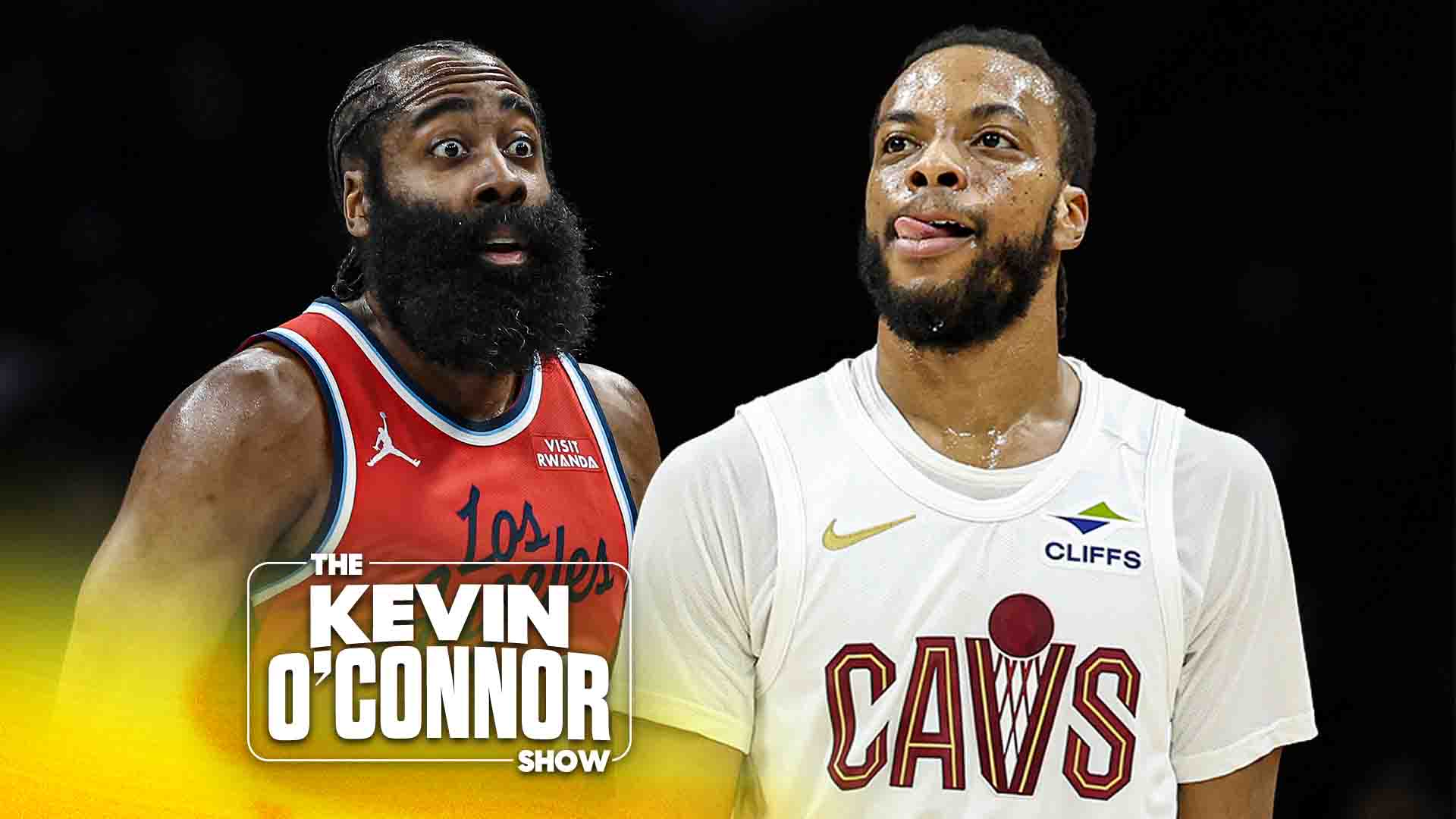
Lost in the shuffle of all the major trades that went down Tuesday, withJames Harden moving to Cleveland,Jaren Jackson Jr. ending up in Utah, andJaden Ivey going to Chicago, the Bulls made another trade that saw a former All-Star center change addresses.

Yahoo Sports

Nikola Vučević is now a Boston Celtic, as the organization took on Vučević and a second-round selection for Anfernee Simons and a second-round selection.

(Confused about the second-round swap? We'll get to it.)

Let's get into some trade grades.

Chicago Bulls: B

The Bulls did Boston a solid by easing its tax burden, taking on over $6 million in salary in the swap.

You'd think lowering Boston's tax bill would be worth a second-rounder outright, but apparently not in this economy.

That said, the Bulls did move up, and significantly so.

Advertisement

The Celtics relinquished a second, courtesy of the New Orleans Pelicans, which is currently slotted to land at No. 32, and the Celtics walk away with a 2027 second via Denver, which is expected to be low.

It's unclear if Simons will play a role in Chicago moving forward. His expiring contract, worth $27.6 million, is a number he's highly unlikely to receive again in free agency, meaning the Bulls could possibly get him back at a decent price.

For the rest of this season, Simons does work within Chicago's fast-paced offense in which it shoots a lot of 3-pointers and has a keen focus on offensive volume.

Will he get minutes alongside the recently acquired Ivey? Time will tell, but the Bulls currently have one of the deepest backcourts in the league from an offensive perspective.

Boston Celtics: B+

Look, this team needed a center, especially one who can stretch the floor. Vučević can do that. He's hit 39.1% of those shots over his last 121 games and is getting them up at a decent volume (4.5 per), which fits well with how Boston plays.

Vučević also provides the team with strong rebounding (10.4 for his career) and can string together nice passing patterns.

He'll give the Celtics an interior offensive boost they've lacked for a while, all while the organization saves money on its tax bill.

Yes, the Celtics did give up a high second in what could be an absolutely loaded draft, but if that means solving an issue and getting a more streamlined cap sheet, so be it. That should be worth it at the end of the day.

Read More

An angel resembling Italy's Meloni is painted over after an outcry from church and state

February 04, 2026
An angel resembling Italy's Meloni is painted over after an outcry from church and state

ROME (AP) — Call it divine intervention, or maybe just a hasty fix-it job to put an end to days of speculation and scandal. But the end result is that theAngel Meloniis no more.

A painting of a cherub with a face bearing a remarkable resemblance to Italian Premier Giorgia Meloni had attracted large crowds to the Basilica of San Lorenzo in Lucina, one of the oldest basilicas in Rome. That angel's face was gone when the church opened its doors Wednesday: the cherub's body remains, but the face was erased with a sloppy slab of paint or plaster.

La Repubblica newspaper, which broke the story Saturday when it published the Meloni-esque angel on its front page, said the restorer responsible for making the Meloni cherub had covered it up overnight at the request of church authorities.

Restorer Bruno Valentinetti admitted to the paper that he had styled the angel on Meloni, but didn't say why.

The diocese of Rome and the Italian Culture Ministry had both launched investigations after the image of the cherub was first published.

The original painting only dated from 2000, so it wasn't a matter of damage to the church's historic patrimony. But Cardinal Baldassare Reina, the pope's vicar for Rome, insisted that a political figure had no place in church art.

The ruckus gave the basilica newfound celebrity status, with curious locals and tourists lining up to photograph the Meloni cherub, at times disrupting Mass.

In a statement Wednesday, the Culture Ministry set down the rules going forward: If the basilica plans to repaint the angel face, it needs prior authorization from the government which owns the church, the diocese of Rome which operates it and the culture ministry's special superintendency for Rome.

Lest there be any question, the Culture Ministry said that the request for permission must be "accompanied by a sketch of the image."

Valentinetti had first made the cherub in 2000, when one of the basilica's front chapels was renovated to include a bust of the last king of Italy, Umberto II. Included in the decoration was a cherub holding a map of Italy, seemingly kneeling down before the king.

The cherub was restored after water leaks damaged the basilica starting in 2023, and emerged with the face of Meloni.

The investigations that were launched were to identify how the original 2000 cherub looked, with the aim of restoring the painting to that image. The faceless cherub seen Wednesday appeared a temporary fix to erase Meloni's likeness from the work.

The Italian premier had made light of the whole thing. "No, I definitely don't look like an angel," Meloni wrote on social media on the weekend with a laughing/crying emoji alongside a photo of the work.

Associated Press religion coverage receives support through the AP'scollaborationwith The Conversation US, with funding from Lilly Endowment Inc. The AP is solely responsible for this content.

Read More